.
Showing posts with label Nutritionist. Show all posts

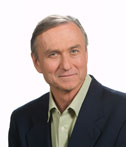
Dean Ornish

Dean Ornish
Dean Ornish is a clinical professor at UCSF and founder of the non-profit Preventive Medicine Research Institute. He's a leading expert on fighting illness - particularly heart disease with dietary and lifestyle changes.

Why you should listen to him

Dr. Dean Ornish wants you to live longer, and have more fun while you're at it. He's one of the leading voices in the medical community promoting a balanced, holistic approach to health, and proving that it works. The author of Eat More, Weigh Less and several other best-selling books, Ornish is best known for his lifestyle-based approach to fighting heart disease.

His research at the Preventive Medicine Research Institute (the nonprofit he founded) clinically demonstrated that cardiovascular illnesses -- and, most recently prostate cancer -- can be treated and even reversed through diet and exercise. These findings (once thought to be physiologically implausible) have been widely chronicled in the US media, including Newsweek, for which Ornish writes a column. The fifty-something physician, who's received many honors and awards, was chosen by LIFE Magazine as one of the most influential members of his generation. Among his many pursuits, Ornish is now working with food corporations to help stop America's obesity pandemic from spreading around the globe.

For over 30 years, Dr. Ornish has directed clinical research demonstrating, for the first time, that comprehensive lifestyle changes may begin to reverse even severe coronary heart disease, without drugs or surgery. Recently, Medicare agreed to provide coverage for this program, the first time that Medicare has covered a program of comprehensive lifestyle changes. He recently directed the first randomized controlled trial demonstrating that comprehensive lifestyle changes may stop or reverse the progression of prostate cancer. His current research showed that comprehensive lifestyle changes affect gene expression, “turning on” disease-preventing genes and “turning off” genes that promote cancer and heart disease.

He is the author of six best-selling books, including New York Times’ bestsellers Dr. Dean Ornish's Program for Reversing Heart Disease, Eat More, Weigh Less, Love & Survival, and his most recent book, The Spectrum. He writes a monthly column for Newsweek magazine.

Reference:

Website: The Ornish Spectrum
Website: Preventive Medicine Research Institute
Website: CTSI Clinical Research Center at USF
Wikipedia: Dr. Dean Ornish

Collection of Videos:

View in YouTube

T Colin Campbell

T Colin Campbell

Dr. Campbell is a Jacob Gould Schurman Professor Emeritus of nutritional biochemistry at Cornell University. He has received more than 70 grant-years of peer-reviewed research funding and authored more than 300 research papers. His legacy, The China Study, is the most comprehensive study of health and nutrition ever conducted. The study was the culmination of a 20-year partnership of Cornell University, Oxford University and the Chinese Academy of Preventive Medicine. In recent years Dr. Campbell has turned his attention to public education and outreach, through his lectures and his website www.tcolincampbell.org

Reference 

The China Study
http://www.thechinastudy.com/authors.html


Collection of Videos:

View in YouTube

Caldwell B. Esselstyn

Caldwell B. Esselstyn

Caldwell B. Esselstyn, Jr., received his B.A. from Yale University and his M.D. from Western Reserve University. In 1956, pulling the No. 6 oar as a member of the victorious United States rowing team, he was awarded a gold medal at the Olympic Games. He was trained as a surgeon at the Cleveland Clinic and at St. George's Hospital in London. In 1968, as an Army surgeon in Vietnam, he was awarded the Bronze Star.

In 1991, Dr. Esselstyn served as President of the American Association of Endocrine Surgeons, That same year he organized the first National Conference on the Elimination of Coronary Artery Disease, which was held in Tucson, Arizona. In 1997, he chaired a follow-up conference, the Summit on Cholesterol and Coronary Disease, which brought together more than 500 physicians and health-care workers in Lake Buena Vista, Florida. In April, 2005, Dr. Esselstyn became the first recipient of the Benjamin Spock Award for Compassion in Medicine. heartattackproof.com

Reference:


Collection of Videos:


View in YouTube

John A McDougall

John A McDougall
Physician and nutrition expert. He has been studying, writing and "speaking out" about the effects of nutrition on disease for over 30 years.

Dr. McDougall has cared for thousands of patients over almost 3 decades of medical practice and has run a highly successful live-in program for more than 17 years. Dr. McDougall has developed a nourishing , low-fat, starch-based diet that not only promotes a broad range of dramatic and lasting health benefits such as weight (fat) loss, but most importantly can also reverse serious illness, such as heart disease, without drugs.

He has written a number of books including The McDougall Plan: 12 Days to Dynamic Health, McDougall's Medicine: A Challenging Second Opinion, The McDougall Program for Maximum Weight Loss, The New McDougall Cookbook, The McDougall Program for Women, and his latest ground breaking book, The McDougall Program for a Healthy Heart at drmcdougall.com

Reference:

Websites: Dr. McDougall


Collection of Videos:
View in YouTube

Dr Michael Greger

Michael Greger

Michael Greger, M.D., is a physician and Director of Public Health and Animal Agriculture at the Humane Society of the United States. He is an internationally recognised speaker on a number of important public health and social justice issues. He is also the author of Carbophobia: The Scary Truth Behind America's Low Carb Craze and Heart Failure: Diary of a Third Year Medical Student, and he has contributed to a number of other books on nutrition and food safety issues.

In addition to debating the National Cattlemen's Beef Association Director before the FDA, Dr. Greger was invited as an expert witness to defend Oprah Winfrey in the infamous "meat defamation trial."

He is a graduate of the Cornell University School of Agriculture and the Tufts University School of Medicine.

drgreger.org

Loading...

Reference:

The Humane Society
http://www.hsus.org/

NutritionFacts.Org is brought to you by the Jesse & Julie Rasch Foundation in partnership with Michael Greger M.D. Dr. Greger scours the world of nutrition-related research, as published in scientific journals, and brings that information to you in short, easy to understand video segments. We also provide links to the original journal articles whenever possible so that you can source the information directly, if you so desire.

Collection of Videos:

Optimum Nutrition Recommendations

Written by: Michael Greger M.D. on September 12th, 2011 

In today’s NutritionFacts.org video-of-the-day Golden glow, and tomorrow’s, Produce, not pills to increase physical attractiveness, I review the new research suggesting the consumption of dark green leafy vegetables improves the healthy appearance of Caucasians* due to carotenoid deposition in the skin. Taking those same phytonutrients in pill form, though, doesn’t work. We should strive to get most of our nutrients from plants, not pills.

 The balance of scientific evidence suggests that the healthiest way to eat is a vitamin B12-fortified diet of whole plant foods. For optimum nutrition, we should be sure to include in our daily diet not only an array of whole grains, beans, nuts, seeds, fruit, and as many vegetables as we can eat, but also specifically dark green leafy vegetables, berries, and white (or green) tea.

Attention should also be paid to these nutrients:

 Vitamin B12 (see also Which type of vitamin B12 is best)

  • At least 2,500 mcg (µg) cyanocobalamin once each week, ideally as a chewable, sublingual, or liquid supplement 
    • or at least 250 mcg daily of supplemental cyanocobalamin (you needn’t worry about taking too much) 
    • or servings of B12-fortified foods three times a day, each containing at least 25% U.S. “Daily Value” on its label 
  • Those over 65 years of age should take at least 1,000 mcg (µg) cyanocobalamin every day. 
  • Tip: If experiencing deficiency symptoms, the best test is a urine MMA level (not serum B12 level) 
Omega-3 Fatty Acids 

  • 250 to 500 mg daily of yeast- or algae-derived DHA and/or EPA 
Vitamin D (daily recommendations for those in the Northern Hemisphere; D3 from animal or plant sources may be preferable to the D2 sourced from fungi)


  • Below approximately 30°latitude (south of Los Angeles/Dallas/Atlanta/Cairo) 
    • 15-30 minutes of midday sun (15 for those with lighter skin; 30 for those with darker skin) 
    • or 2,000 IU supplemental vitamin D 
  • Between 30° latitude (sample cities above) & 40°latitude (Portland/Chicago/Boston/Rome/Beijing) 
    • From February through November 
      • 15-30 minutes of midday sun (15 for those with lighter skin; 30 for those with darker skin) 
      • or 2,000 IU supplemental vitamin D 
    • From December through January 
      • 2,000 IU supplemental vitamin D 
  • Between 40° latitude (sample cities above) & 50°latitude
    (Edmonton/London/Berlin/Moscow)
    • From March through October 
      • 15-30 minutes of midday sun (15 for those with lighter skin; 30 for those with darker skin) 
      • or 2,000 IU supplemental vitamin D 
    • From November through February 
      • 2,000 IU supplemental vitamin D 
  • Above approximately 50°latitude (north of Edmonton/London/Berlin/Moscow) 
    • From April through September (or even briefer above 60°latitude (Anchorage/Stockholm)) 
      • 15-30 minutes of midday sun (15 for those with lighter skin; 30 for those with darker skin) 
      • or 2,000 IU supplemental vitamin D 
    • From October through March (or even longer above 60°latitude (Anchorage/Stockholm)) 
    • 2,000 IU supplemental vitamin D 
Calcium

  • At least 600 mg daily via calcium-rich plant foods—preferably low-oxalate dark green leafy vegetables, which includes all greens except spinach, chard, and beet greens (all very healthy foods, but not good calcium sources due to their oxalate content). 
Iodine 

  • For those who don’t eat seaweed or use iodized salt, a 150 mcg daily supplement 
    • The sea vegetable hijiki (hiziki) should not be eaten due to high arsenic levels 
    • Kelp should be avoided as it tends to have too much iodine 
Iron 

  • All menstruating women should increase their absorption by combining foods rich in iron and vitamin C at meals and should get checked for iron-deficiency anemia every few years 
  • Men should be checked for an iron overload disease before any attempt to increase intake 
Selenium 

  • Northern Europeans may need to take a supplement or eat a daily Brazil nut 
-Michael Greger, M.D. 

 * Due to the pervasive under-representation of traditionally marginalized groups in clinical research, comparable science across the skin color spectrum is not yet available.